
Crypto News
Experts react: NATO allies agreed to a 5 p.c protection spending goal in a low-drama summit. Now what?

![[Events & Trends]](https://crypto-on.work/wp-content/uploads/2025/06/Experts-react-NATO-allies-agreed-to-a-5-percent-defense.jpg)
Experts react: NATO allies agreed to a 5 p.c protection spending goal in a low-drama summit. Now what?
Uncover the newest tendencies within the Web3 house. This article dives into: “Experts react: NATO allies agreed to a 5 percent defense spending target in a low-drama summit. Now what?”.
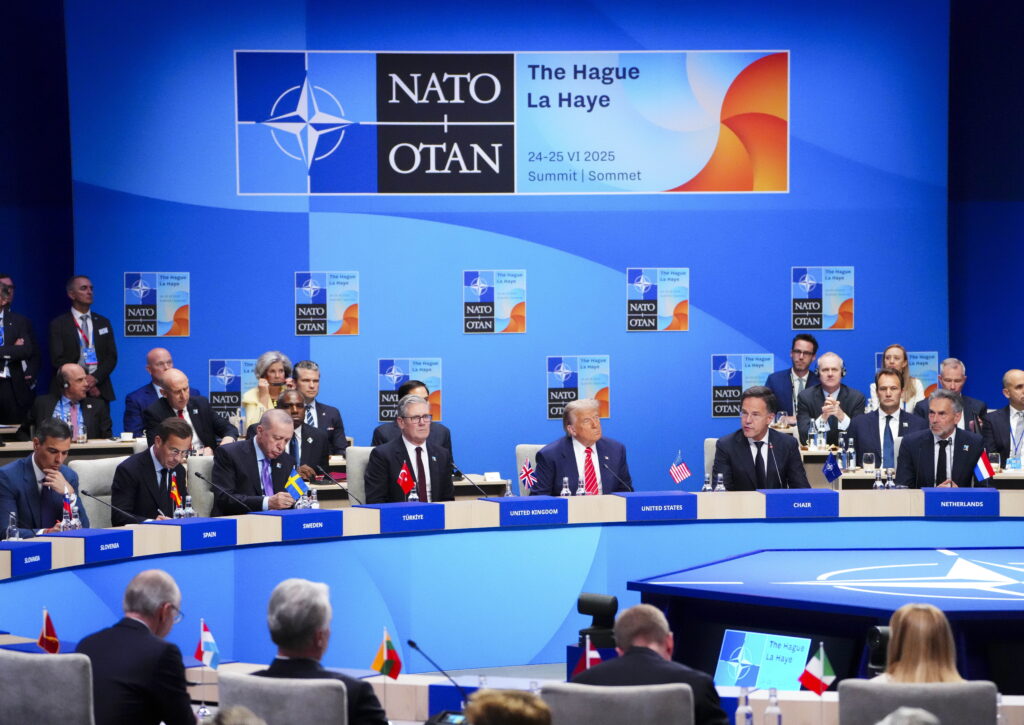
In Dutch, haag, from which The Hague will get its title, means hedge. It’s maybe becoming, then, that when NATO leaders met in The Hague this week, there have been a number of hedges. Allies sought to hedge towards an unpredictable US president by limiting the summit’s scope. They additionally hedged towards the United States decreasing its dedication to the Alliance by promising to extend protection and defense-related spending to five p.c of gross home product (GDP) by 2035. And they hedged—as in averted a direct reply—on the central challenge of Russia’s ongoing warfare in Ukraine.
Below, Atlantic Council specialists dig into the main points of what occurred within the Netherlands over the previous two days and what’s subsequent for the Alliance.
Click to leap to an professional evaluation:
Ian Brzezinski: Even with the ‘5 percent’ success, no new substantive motion was taken on Russia
John E. Herbst: Though Ukraine was relegated to a aspect occasion, there have been indicators of progress
Daniel Fried: Trump obtained a win, and NATO obtained the sources it wants
Philippe Dickinson: The Hague Declaration is diplomatic haiku
Rachel Rizzo: Will European leaders spend the political capital wanted to succeed in 5 p.c?
Rob Murray: Allies might want to rewire their monetary structure to succeed in 5 p.c
John R. Deni: The centered communiqué caps a profitable summit, however there are causes for concern
Andrew Bernard: Spain digs a deeper credibility gap
Even with the ‘5 percent’ success, no new substantive motion was taken on Russia
NATO’s summit at The Hague shall be remembered each for what was and what wasn’t stated and performed.
The dedication by NATO heads of state to allocate a minimal of 5 p.c of GDP annually “on core defence requirements as well as defence- and security-related spending by 2035” guarantees to considerably improve allied, significantly European, navy capacities. Fulfilling that pledge is essential to operationalizing NATO’s new regional protection plans to discourage Russian aggression. That was a transparent success for US President Donald Trump and for the Alliance as a complete.
But what was not left clear was the way forward for US dedication to European safety. While the United States agreed to communiqué language that reaffirmed an “ironclad commitment to collective defence as enshrined in Article 5 of the Washington Treaty,” little was communicated by Trump about the way forward for US power posture in Europe. Since his inauguration in January, his administration has repeatedly signaled its intent to attract down US forces in Europe so as to reinforce US pursuits within the Indo-Pacific and the Western Hemisphere. A big drawdown may profoundly have an effect on the distribution of allied power commitments that underpin NATO’s new regional protection plans.
More importantly, the NATO Summit convened as Russia brutally escalates its invasion of Ukraine. Yet the summit yielded no new substantive motion towards Russian President Vladimir Putin’s aggression. Instead, the United States blocked a long-planned effort to promulgate on the summit an Alliance technique towards Russia; US Secretary of State Marco Rubio reiterated US opposition to imposing new financial sanctions on Russia; and Trump publicly balked on offering Ukraine a brand new tranche of safety help.
The United States’ absence of motion towards Russia at The Hague summit issues. There is not any clearer and instant indication of dedication to transatlantic safety than what a NATO ally does or doesn’t do to help Ukraine towards Russia’s ongoing invasion.
—Ian Brzezinski is a resident senior fellow with the Scowcroft Center for Strategy and Security and former US deputy secretary of protection for Europe and NATO coverage.
NATO Defense Spending Tracker
Though Ukraine was relegated to a aspect occasion, there have been indicators of progress
There was a lot sound and fury within the lead-up to and preparation for the NATO Summit relating to 2 key questions of NATO and US coverage towards Russia and the warfare on Ukraine. Reflecting the advert hoc nature of Trump’s method to Russia and the warfare, the outcomes of the week are blended however on stability constructive. The two downsides come from steps NATO took to keep away from a blowup with Trump. At its 2024 summit, NATO determined that it wanted a brand new strategic coverage to handle the hazards Moscow poses. Many NATO leaders imagine, together with Ukrainian President Volodymyr Zelenskyy, {that a} Russian win in Ukraine might be adopted by extreme provocations and worse towards NATO members. But to keep away from setting off the US president, NATO determined months in the past to shelve the hassle to put in writing a brand new method. For the identical cause, NATO additionally determined to restrict the position of the Ukrainian president to aspect occasions. Both steps, taken as Ukraine faces essentially the most savage Russian bombing marketing campaign of the warfare, may solely be welcome in Moscow.
This was offset by the point out within the summit communiqué that European protection contributions to Ukraine would depend towards the brand new protection spending necessities for NATO. Moscow was additionally possible not happy with Trump’s post-summit press convention. In it, he expressed his understanding of Ukraine’s want for air protection and promised to see what he may do about getting further air protection programs to Ukraine.
Also on the plus aspect was the dedication made towards assembly Trump’s objective of accelerating protection spending to five p.c by 2035. This was sharply criticized by Putin’s press spokesman Dmitri Peskov as harmful and having required the West to “conjure up a demonic threat.” It’s necessary, too, that the summit communiqué linked this improve to the Russian risk to NATO.
Trump additionally made clear that he acknowledges that Putin is the impediment to peace. Twice in lower than per week, the Russian president provided to assist negotiate an finish to the battle between Israel and Iran. Each time, Trump declined and prompt that Putin take note of ending the warfare in Ukraine. Trump emphasised this level once more in his post-summit press convention. While recognizing this, Trump has nonetheless proved reluctant to place stress on the Kremlin, and the US Senate sanctions invoice with eighty-four cosponsors continues to be on maintain, ready for a nod from the White House. Moreover, Rubio stated at The Hague that now was not the time to place new sanctions on Russia as a result of it could persuade the Kremlin to not have interaction in peace talks. That evaluation is precisely flawed and out of step with the quite a few statements from Trump that he would put stress on the celebration obstructing peace. Only stress may persuade Putin—who not too long ago stated that Russia has a proper to take all of Ukraine—to barter Trump’s long-declared objective of a steady peace.
—John E. Herbst is the senior director of the Atlantic Council’s Eurasia Center and a former US ambassador to Ukraine.
Trump obtained a win, and NATO obtained the sources it wants
It wasn’t superb. But generally adequate is what you want. The NATO Summit Declaration acknowledged explicitly the risk from Russia and reaffirmed Article 5’s collective protection dedication with out qualification; dedicated allies to a 3.5 p.c plus 1.5 p.c improve in protection and defense-related spending, respectively, by 2035; and reaffirmed allies’ commitments to contribute to Ukraine’s protection and protection business. That’s a good set of achievements, particularly when set towards the extra dire predictions of a blow-up or a no-show by Trump, or a impasse.
Trump prompt he was joyful to take the win versus transferring the goalposts. Before the summit, Trump had made ambiguous remarks about Article 5; at his summit press convention, Trump spoke with respect in regards to the patriotism he sensed from his fellow NATO leaders and remarked that “they need the United States. And we’re here to help them protect their country.”
After assembly with Zelenskyy, Trump left open the potential for offering extra funds and Patriot batteries for Ukraine’s protection, however he may have (and may have) gone additional, for instance by reraising his proposal for a thirty-day unconditional cease-fire, threatening Russia with laborious new sanctions if Putin doesn’t agree, and committing to offer Ukraine with a gradual move of US weapons a technique or one other. Still, Trump moved from chilly hostility to Ukraine’s struggle for survival again to a supportive mode.
The Trump administration had been making the case that NATO’s members needed to contribute much more for the frequent protection and that, absent actual dedication to take action, the United States couldn’t be counted on to maintain selecting up the slack. The mixture of the Russian risk and Trump stress (principally the previous) has lastly registered with key Western Europeans who’ve acknowledged that the Americans had been proper about lagging European protection spending and that the Poles and Baltic international locations (and others in Europe’s east) had been proper in regards to the risk from Russia. Late, however hopefully not too late, Europe is standing up its strategic capability. That, it appears, registered with Trump and his staff.
NATO Secretary General Mark Rutte has been working to persuade Trump that NATO may ship. He took some criticism for his flattery of Trump, however he seems to have made the correct name. US Permanent Representative to NATO Matthew G. Whitaker appears to have been working to land the deal and have Trump take the win. They and their groups delivered. Trump will get his win, NATO will get wanted sources, and the United States stays in. Good sufficient.
—Daniel Fried is the Weiser Family distinguished fellow on the Atlantic Council and a former US ambassador to Poland.
The Hague Declaration is diplomatic haiku
Brevity will be the soul of wit, however it isn’t usually the customized of diplomacy. Summit statements are normally painstakingly negotiated at size over a number of months, to verify everybody’s precedence concern is addressed by way of elaborately layered language. Not this yr. At solely 5 paragraphs and 427 phrases, The Hague Declaration is diplomatic haiku.
The brevity displays the modified transatlantic political context. Last yr, the Washington Declaration ran to five,341 phrases, with intensive and detailed sections protecting protection modernization efforts, help for Ukraine, and the broader strategic problem posed by China, Iran, and North Korea. This yr, there isn’t any point out of China, Iran, or North Korea, a mirrored image of the obvious prevailing view within the Pentagon that the respective theaters shouldn’t be linked. Support for Ukraine is briefly known as sovereign commitments made by particular person allies. Like all good haiku, The Hague Declaration conveys an unmistakable emotional reality. This is an Alliance that dances to Trump’s tune. Its primary precedence is his precedence—getting the Europeans to spend extra.
But for the brand new NATO secretary basic, Rutte, that is nonetheless a profitable end result. The communiqué reaffirms the “ironclad” dedication to Article 5 and names Russia because the foremost safety risk. Moreover, the summit produced no uncomfortable confrontations with Trump. And the exceptional leap in spending ambition shouldn’t be obscured by the late negotiations about carve-outs for the Alliance’s spending laggards. For all the broader anxieties of the previous few months, Rutte has achieved his prime summit goal: maintain Trump on board.
—Philippe Dickinson is a deputy director with the Transatlantic Security Initiative on the Atlantic Council’s Scowcroft Center for Strategy and Security. Prior to becoming a member of the Council, he was a profession diplomat with the United Kingdom’s Foreign, Commonwealth and Development Office.
Will European leaders spend the political capital wanted to succeed in 5 p.c?
The NATO Summit communiqué, whereas brief, tackles one of many biggest challenges going through the Alliance as we speak, which is how Europe plans to beef up its protection spending because the United States geopolitically orients itself away from the outdated continent. The language, that allies “commit to invest 5 percent of GDP annually on core defence requirements as well as defence- and security-related spending by 2035,” doesn’t depart a lot wiggle room for failure. Although, on the identical time, the language might depart simply sufficient wiggle room for some allies (comparable to Spain) to decide out.
The query now’s whether or not or not European leaders are prepared to expend the political capital essential to persuade their publics that protection is value spending on, particularly if it comes out of different social spending budgets. I don’t assume most individuals, particularly within the US authorities, respect simply how a lot of an ask that’s. So, we should always have a good time but additionally perceive that now’s the place the laborious work really begins and that we even have a protracted solution to go to get protection spending as much as the degrees dedicated.
—Rachel Rizzo is a nonresident senior fellow on the Atlantic Council’s Europe Center.
Allies might want to rewire their monetary structure to succeed in 5 p.c
The problem with NATO’s 5 p.c of GDP by 2035 protection pledge isn’t Spain’s home politics—it’s whether or not the Alliance can reveal a reputable path to ship on what it has promised. At the 2014 Wales summit, allies dedicated to reaching 2 p.c of GDP by 2024. Most met that mark, however not all—and that’s the issue. When political commitments aren’t adopted by way of with motion, deterrence erodes. Our adversaries discover. So do our publics.
Avoiding that end result at 5 p.c requires greater than rhetoric. It calls for a transparent, coordinated monetary technique—one which alerts seriousness and ensures sources are spent successfully. That begins with redesigning the protection capital stack. Allies have to rewire the monetary structure that helps Western safety to replicate the truth that they’re now not in peacetime: nationwide export credit score businesses should be activated, industrial banks incentivized, personal fairness and enterprise capital mobilized, and long-term institutional traders delivered to the desk.
A purpose-built multilateral Defense, Security, and Resilience Bank owned by allies ought to anchor this new structure—offering ensures, absorbing danger, and enabling capital to move to the mid-tier companies and industrial suppliers they rely on however have undercapitalized for too lengthy. But it’s not a silver bullet. This should be a system-wide mobilization of private and non-private finance.
The scale of the shift is huge: To get to five p.c requires $1.9 trillion in further annual spending throughout NATO. Without structural reform, that surge will drive inflation, not capability. The indicators are already there—155mm artillery shells that price $2,000 earlier than 2022 now exceed $8,000. Leopard 2 tanks offered to the Dutch for $23 million every in October 2024 had been offered to Austria in February 2025 at $30 million per tank.
If 5 p.c is to be greater than a symbolic goal, allies should construct the monetary instruments to match their strategic ambition. That begins now—with motion, not aspiration.
—Rob Murray is a nonresident senior fellow within the Forward Defense program and the Transatlantic Security Initiative inside the Atlantic Council’s Scowcroft Center for Strategy and Security.
The centered communiqué caps a profitable summit, however there are causes for concern
This yr’s five-paragraph NATO summit communiqué is unprecedentedly brief, fully in contrast to the thirty-eight-paragraph communiqué from final yr’s summit in Washington or the ninety-paragraph behemoth agreed at Vilnius in 2023. In some respects, this can be a welcome change, given the everything-under-the-sun method of previous communiqués, which seemingly solid NATO as unable and/or unwilling to prioritize.
In distinction, the Hague communiqué is definitely centered and, given the considerations of some concerning the character of the United States’ relationship with NATO particularly and Europe extra broadly, signifies that the summit was largely profitable. Four components of the communiqué underline this success, whereas three caveats current some causes for concern.
First, the dedication to five p.c protection spending—whereas requiring cautious consideration to make sure allies’ expenditures really contribute to protection in significant methods—represents a major enchancment over the earlier protection funding pledge of simply 2 p.c.
Second, and on a extra inside-baseball degree, the communiqué ties elevated protection spending on to agreed Alliance functionality targets. These targets are based mostly on allied operations plans for the protection of Europe and North America. Ultimately, this implies elevated allied spending ought to explicitly strengthen protection and deterrence.
Third, the communiqué clearly locations Russia on the middle of allied safety considerations, the place it belongs—Moscow stays the best risk to European (and therefore American) safety and stability, with the demonstrated potential and said intent to undermine Western pursuits, unity, and prosperity.
Fourth, allies highlighted the significance of constant support to Ukraine and the clear, specific linkage between its safety and that of Europe and North America.
Amid these successes, there are three necessary potential causes for concern. The first is the entire lack of any reference to China, which represents an specific risk to Europe and North America as we speak. The second is the willingness of allies to incorporate support to Ukraine within the protection spending calculus, which dangers undermining efforts to realize the aptitude targets famous above. And lastly, the allies seem as soon as once more overly wedded to holding annual summits—that is fully pointless and doesn’t replicate a conditions-based method.
—John R. Deni is a nonresident senior fellow within the Atlantic Council’s Transatlantic Security Initiative, a analysis professor on the US Army War College’s Strategic Studies Institute, and a nonresident senior fellow on the NATO Defense College. The views expressed are his personal.
Spain digs a deeper credibility gap
Spain’s intention to decide out of NATO’s historic leap in protection spending marred the summit’s most necessary achievement. Not solely does the Spanish choice symbolize a self-inflicted fault line within the Alliance’s strategic middle of gravity—consensus amongst thirty-two nations. It additionally drives Spain deeper right into a credibility deficit with its European allies, particularly these on the Alliance’s japanese flank.
Standing as much as the United States performs properly at house for Prime Minister Pedro Sánchez, who’s in search of to attract consideration away from a corruption scandal in his Socialist Party. The prime minister even went on the offensive, alleging that the nation would have complied with the brand new protection spending plan if the opposition center-right celebration was in energy. But nationwide politics solely partially explains Spanish intransigence.
The reality is that the 5 p.c objective was such a sticker shock to Spain as a result of it was already ranging from one of many lowest protection spending charges amongst NATO members, unwilling over the previous decade to make incremental protection spending will increase like different nations. Recent bulletins that Spain would lastly attain the two p.c mark rang empty, as a lot of the proposed spending will increase didn’t produce new navy capabilities.
While Spain prides itself on deploying troops at excessive charges in help of present NATO missions, its public flaunting towards investing extra in new capabilities will depart allies skeptical that the Spanish are prepared to share the dangers that include the duties of collective protection. Burden sharing implies danger sharing, and Spain isn’t making a compelling argument that it’s prepared to share danger. Few international locations will imagine Spain’s assertion that it might probably meet its functionality targets with simply 2.1 p.c of GDP. This poses vital credibility issues for the Spanish, who should dig out from this gap in the event that they wish to earn a few of this credibility again from their European allies.
—Andrew Bernard is a nonresident senior fellow with the Atlantic Council’s Europe Center
Further studying
Mon, Jun 2, 2025
For NATO in 2027, European management shall be key to deterrence towards Russia
Issue Brief
By
NATO lacks the operational integration, logistics, and joint power capabilities wanted to rapidly counter Russian mass and tempo close to its borders. With the United States more and more centered elsewhere, how can the Alliance retain navy superiority in 2027 with out overreliance on US navy may?
Image: June 25, 2025, The Hague, Netherlands: NATO Secretary General Mark Rutte, center proper, delivers opening remarks as he sits beside US President Donald Trump throughout a gathering of the North Atlantic Council on the NATO Summit in The Hauge, Netherlands on Wednesday, June 25, 2025. (Credit Image: © Sean Kilpatrick/The Canadian Press by way of ZUMA Press) REUTERS
Related Articles
Learn about professional insights within the Bitcoin house. This article explores: “Experts react: NATO allies agreed to a 5 percent defense spending target in a low-drama summit. Now what?”.
- Crypto News – Stay up to date with the newest world crypto headlines, breaking tales, and regulatory updates.
- Market & Price Analysis – In-depth insights, technical breakdowns, and value actions of main cryptocurrencies.
- DeFi & Web3 – Explore improvements in decentralized finance, smart contracts, and the evolution of the Web3 web.
- Exchanges & Listings – Discover new coin listings, alternate updates, and token launch bulletins.
- Events & Trends – Follow world blockchain occasions, crypto conferences, and rising tendencies shaping the business.
Connected Crypto Coverage
- Explore BlockTrend for professional takes on blockchain tendencies & developments
- Visit CryptoCoil for reside market knowledge, altcoin insights & sentiment monitoring
- Check i-News for contemporary world crypto headlines & breaking tales
- Claim & earn with trusted drops on i-Coin — your faucet & incomes hub
- Learn crypto the sensible means on i-VIP — sensible tutorials, guides & ideas for novices
- Discover curated crypto insights on SFBNEWS — automated crypto updates & professional curation
[ad_3]
Content Reference
This article is customized from www.atlanticcouncil.org. We’ve restructured and rewritten the content material for a broader viewers with improved readability and search engine optimization formatting.
Your Crypto Source
Check out CryptoON for expert-written guides.

![[Events & Trends]](https://crypto-on.work/wp-content/uploads/2025/08/Navigating-the-new-normal-Strategic-simultaneity-US-Forces-Korea-flexibility-400x102.jpg)
![[Events & Trends]](https://crypto-on.work/wp-content/uploads/2025/08/Navigating-the-new-normal-Strategic-simultaneity-US-Forces-Korea-flexibility-80x80.jpg)
![[Events & Trends]](https://crypto-on.work/wp-content/uploads/2025/08/Bitwise-Files-for-First-US-Chainlink-ETF-Offering-Direct-Exposure-400x240.jpg)
![[Events & Trends]](https://crypto-on.work/wp-content/uploads/2025/08/Bitwise-Files-for-First-US-Chainlink-ETF-Offering-Direct-Exposure-80x80.jpg)
![[Events & Trends]](https://crypto-on.work/wp-content/uploads/2025/08/Five-questions-and-expert-answers-about-where-the-US-South-Korea-400x240.jpg)
![[Events & Trends]](https://crypto-on.work/wp-content/uploads/2025/08/Five-questions-and-expert-answers-about-where-the-US-South-Korea-80x80.jpg)
![[Events & Trends]](https://crypto-on.work/wp-content/uploads/2025/08/Adidas-Superstar-Relaunch-Debuts-At-Future-Stores-In-Collaboration-With-OFFICE-400x180.jpg)
![[Events & Trends]](https://crypto-on.work/wp-content/uploads/2025/08/Adidas-Superstar-Relaunch-Debuts-At-Future-Stores-In-Collaboration-With-OFFICE-80x80.jpg)
![[Events & Trends]](https://crypto-on.work/wp-content/uploads/2025/08/Bitcoin-Summit-2025-Hong-Kong-400x240.jpg)
![[Events & Trends]](https://crypto-on.work/wp-content/uploads/2025/08/Bitcoin-Summit-2025-Hong-Kong-80x80.jpg)
![[Events & Trends]](https://crypto-on.work/wp-content/uploads/2025/08/Best-Crypto-Presale-Pepeto-Positions-to-Outshine-Little-Pepe-in-400x240.jpg)
![[Events & Trends]](https://crypto-on.work/wp-content/uploads/2025/08/Best-Crypto-Presale-Pepeto-Positions-to-Outshine-Little-Pepe-in-80x80.jpg)